


Appendicitis 

Home Appendicitis 

Overview

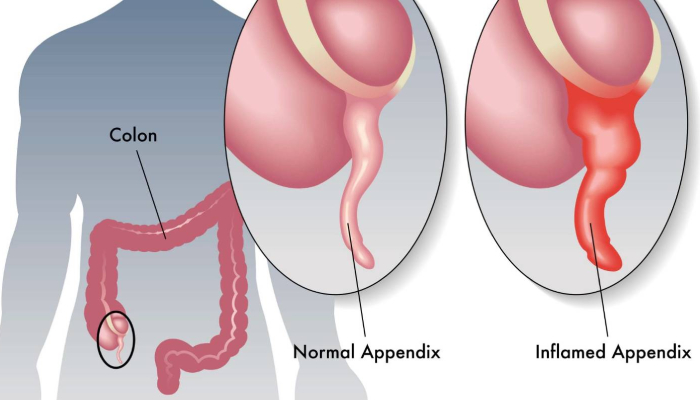
Appendicitis is an inflammation of the appendix, a finger-shaped pouch that projects from your colon on the lower right side of your abdomen. Appendicitis causes pain in your lower right abdomen. However, in most people, pain begins around the navel and then moves. As inflammation worsens, appendicitis pain typically increases and eventually becomes severe.
Although anyone can develop appendicitis, most often it occurs in people between the ages of 10 and 30. Standard treatment is surgical removal of the appendix.

Causes

A blockage in the lining of the appendix that results in infection is the likely cause of appendicitis. The bacteria multiply rapidly, causing the appendix to become inflamed, swollen and filled with pus. If not treated promptly, the appendix can rupture.

Complications

Appendicitis can cause serious complications, such as:

  • A ruptured appendix. A rupture spreads infection throughout your abdomen (peritonitis). Possibly life-threatening, this condition requires immediate surgery to remove the appendix and clean your abdominal cavity.
  • A pocket of pus that forms in the abdomen. If your appendix bursts, you may develop a pocket of infection (abscess). In most cases, a surgeon drains the abscess by placing a tube through your abdominal wall into the abscess. The tube is left in place for about two weeks, and you’re given antibiotics to clear the infection.

Symptoms

How is Appendicitis Treated?

Most people with appendicitis need a surgery called an appendectomy. It removes a diseased appendix. If the appendix hasn’t yet ruptured, surgery prevents that rupture and keeps infection from spreading. Before surgery, you receive intravenous (IV) antibiotics to treat infection. Some cases of mild appendicitis get better with antibiotics alone. Your doctor will watch you closely to determine if you need surgery. Surgery is the only way to treat abdominal infection when the appendix ruptures.

If you need surgery, most appendectomies are done laparoscopically. Laparoscopic procedures take place with a scope through small incisions. This minimally invasive approach helps you heal faster, with less pain. You may need major abdominal surgery (laparotomy) if the appendix ruptures.

Prevention

There’s no proven way to prevent appendicitis. Eating a high-fiber diet with lots of whole grains and fresh fruits and vegetables may help, although experts can’t explain why.

call us to get a free quote

+91 98159 94279

Have any Questions?
Call us Today!

+91 9815994279

Contact Us