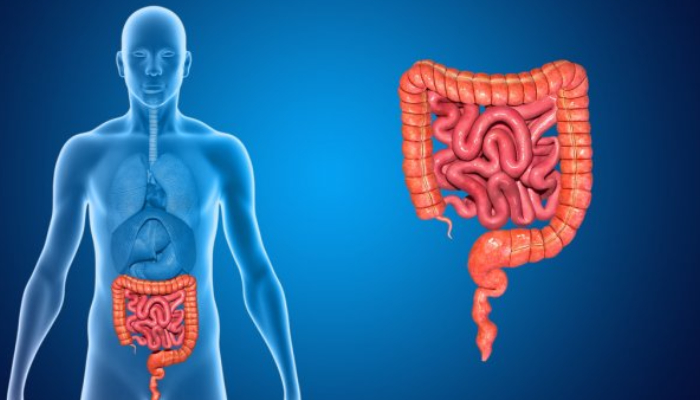
Your large intestine is about five feet (or 1.5 meters) long. The large intestine is much broader than the small intestine and takes a much straighter path through your belly, or abdomen. The purpose of the large intestine is to absorb water and salts from the material that has not been digested as food, and get rid of any waste products left over. By the time food mixed with digestive juices reaches your large intestine, most digestion and absorption has already taken place.
What’s left is mainly fiber (plant matter which takes a long time to digest), dead cells shed from the lining of your intestines, salt, bile pigments (which give this digested matter its color), and water. In the large intestine, bacteria feed on this mixture. These helpful bacteria produce valuable vitamins that are absorbed into your blood, and they also help digest fiber. The large intestine is made up of the following parts:
- Cecum: This first section of your large intestine looks like a pouch, about two inches long. It takes in digested liquid from the ileum and passes it on to the colon.
- Colon: This is the major section of the large intestine; you may have heard people talk about the colon on its own. The colon is also the principal place for water reabsorption, and absorbs salts when needed.
If you are experiencing persistent digestive issues, abdominal pain, bloating, or changes in bowel habits, it’s important to seek medical attention. Early diagnosis and treatment can help prevent complications. For Laparoscopic Surgery, consult Dr. Ujwal Zambare at True Life Clinic & Wellness Center Wakad, Pune for personalized diagnosis and treatment.